
When asking for help feels like too much, you’re not alone in shouldering that burden silently. Symptoms can present differently in women due to hormones, caregiver roles, societal expectations, and more that most treatment programs don’t account for. Mental health treatment for women in Nashville exists to close exactly that gap. At Triony, we listen first. Every woman deserves support that addresses the whole picture.
Mental Health Disorders in Women: What the Numbers Show
Mental health disorders in women affect millions of people across the country every year. According to the National Alliance on Mental Illness, roughly 35 million women live with a mental health disorder annually. The figure spans a wide range of conditions, from anxiety and depression to trauma-related disorders and eating disorders. Seeing the scale helps explain why so many women eventually seek support after managing symptoms alone for years. The numbers below break down some of the most common diagnoses among women nationwide.
- 26.5 million women experience anxiety disorders, including generalized anxiety, panic disorder, and social anxiety
- 13 million women experience a major depressive episode annually
- 6.1 million women meet the diagnostic criteria for PTSD
- 3.5 million women manage bipolar disorder
- 1.5 million women struggle with eating disorders such as anorexia, bulimia, or binge eating disorder
- 750,000 women live with a schizophrenia spectrum disorder
These figures make one thing clear: struggling with a mental health condition is common. It isn’t a personal failing. Many women carry these conditions quietly for years before finding an approach that actually works for their life. A sleep disorder in women often travels alongside these numbers too, since disrupted rest tends to worsen anxiety and mood symptoms. Recognizing a pattern here, whether it involves worry, low mood, or poor sleep, is often the first step forward. We work with women facing many of the conditions represented here, building a plan around each individual case.
What Is Women’s Mental Health Treatment in Nashville?
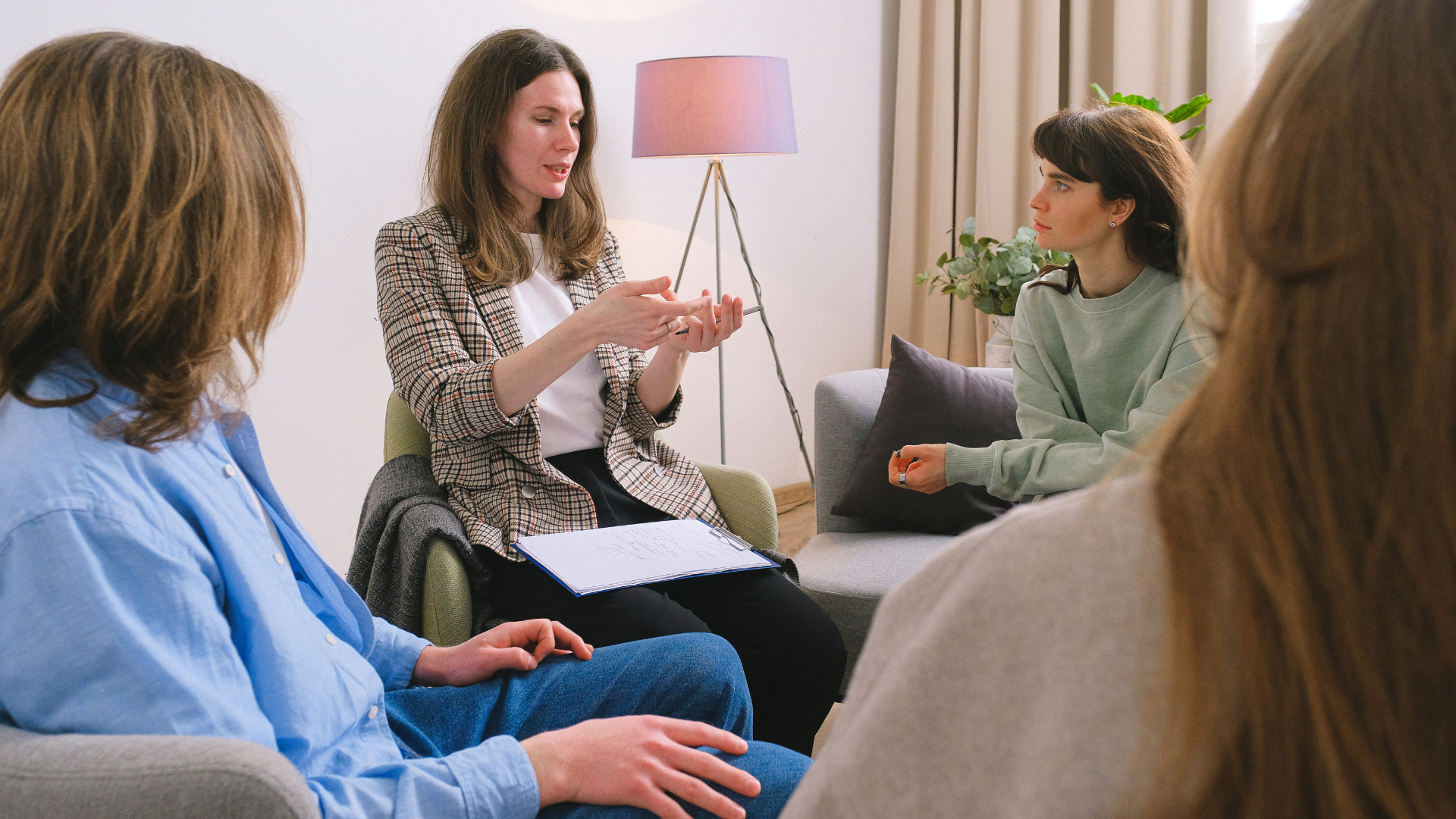
Women’s mental health treatment in Nashville looks at how symptoms actually show up for women, instead of applying a one-size-fits-all approach. Hormonal shifts, pregnancy, postpartum changes, and caregiving demands all shape how anxiety and depression show up day to day. A plan built with this context in mind tends to address root causes more effectively than a generic program. Sessions typically combine individual therapy, skills-based group work, and structured programming based on symptom severity.
Your initial session with Triony is designed to be you talking and someone listening, rather than a questionnaire. Your history, what you’ve tried already, and what you want to happen moving forward. Based on that, the team determines whether a full-day program or a more casual approach is appropriate, and that can change week to week; it’s not set in stone from the start. Recovery is rarely a linear process here, so sessions are adapted when something does not feel right rather than continuing until the session is over.
Mental Health Conditions We Treat in Women
At Trioney, we treat a wide range of mental health conditions in women. Each person receives a detailed initial assessment. During the visit, we encourage your input and assistance in determining what mental conditions and issues you have. It also helps us formulate a personalized care plan and determine the most appropriate level of care.
Anxiety Treatment for Women
Racing thoughts, physical tension, and constant worry can make an ordinary day exhausting long before anyone else notices anything is wrong. Anxiety gets diagnosed in women at notably higher rates than men, often tangled up with hormonal shifts and heavier caregiving loads nobody accounts for. Our sessions pair cognitive strategies with practical tools for calming your body in the moment, not just talking through triggers afterward. Anxiety treatment built around these specific patterns is available here.
Depression Treatment Center for Women
If you have felt low, tired, or disconnected from things you used to care about for weeks now, that pattern is worth naming out loud to someone. A depression treatment center for women looks closely at how depression shows up around major transitions. Postpartum periods, caregiving burnout, and grief that never got space to move through all count. Individual therapy paired with structured daily routines tends to rebuild energy more reliably than willpower alone. We build depression treatment around these specific pressures rather than a generic protocol.
PTSD Treatment for Women
Trauma responses following abuse, assault, loss, or other major life events do not always look like what people expect PTSD to look like. Interpersonal trauma drives a lot of PTSD in women specifically, more often than a single isolated incident. You do not need to relive every detail of what happened before healing starts here. Care focuses on processing traumatic memories safely while rebuilding a felt sense of safety day to day. PTSD treatment here is designed around that reality for women specifically.
Suicidal Ideation Support for Women
These thoughts can develop quietly behind a life that looks completely fine from the outside, which is part of why they go unspoken for so long. Guilt or a sense of caregiving duty often delays women from naming what they are experiencing. The delay is common, not unusual. Support here starts with safety planning first. From there, the deeper causes behind the thoughts get real attention, not just crisis management. Support for suicidal ideation and the first steps toward safety are available whenever you are ready.
BPD Treatment for Women
Intense emotional swings, unstable relationships, and a persistent fear of abandonment are the hallmarks of borderline personality disorder. Women get this diagnosis more often than men, though researchers still debate exactly why. Skills-based approaches build emotional regulation and healthier relationship patterns here, gradually rather than all at once. If these emotional patterns sound familiar, BPD treatment built around them is worth exploring.
Chronic Stress Treatment for Women
Work, caregiving, and household responsibilities pile up gradually until chronic stress stops feeling like a phase and starts feeling like your baseline. Left alone, it feeds anxiety, depression, and physical symptoms like headaches or muscle tension. Identifying your specific stress patterns matters more here than any generic advice to relax. Restructuring your actual weekly routine tends to help more than one big lifestyle overhaul ever does. Chronic stress treatment fits into a broader plan built around your real schedule.
OCD Treatment for Women
Intrusive thoughts paired with compulsive behaviors meant to quiet them define OCD, and the thoughts themselves can feel completely out of character. Postpartum OCD specifically centers on fears about harming a newborn, a presentation that is common but rarely talked about openly. The gap between what you are thinking and who you actually are is often exactly what makes it so distressing. Structured exposure work paired with skills for tolerating uncertainty makes up the core of OCD treatment here.
Substance Use Disorder Treatment for Women
Untreated anxiety, depression, or unresolved trauma often lead somewhere, and for a lot of women that somewhere is substance use. Getting help comes with distinct barriers for women specifically. Stigma tied to caregiving roles is chief among them, along with a tendency to downplay how serious things actually are. Both the substance use itself and whatever is driving it get addressed together here, not sequentially. Substance use disorder treatment reflects that dual approach directly.
Eating Disorder Treatment for Women
Food, body image, and control get tangled together in ways that can seriously affect physical health over time. Women face eating disorders at notably higher rates than men, though the condition remains underdiagnosed across every gender. Nutritional support paired with therapy addressing the emotional roots underneath tends to produce more durable results than either approach alone. Both physical and emotional recovery matter equally in eating disorder treatment here.
Sleep Disorder Treatment for Women
Disrupted sleep and conditions like anxiety, depression, or hormonal shifts tend to travel together, each one making the others harder to manage. If you have stopped expecting a full, uninterrupted night’s rest, that expectation is worth revisiting rather than accepting as permanent. Mood regulation and daily focus both suffer the longer sleep disruption goes unaddressed. Care here treats sleep directly while also addressing whatever underlying condition is driving the disruption. Sleep disorder treatment rarely works in isolation from the rest of recovery.

Treatment Programs and Therapies for Women’s Mental Health
Programs and therapies work together here rather than as separate tracks. CBT, DBT, attachment-based therapy, trauma-informed yoga, and EMDR all get delivered through one of the program levels below, depending on what your symptoms actually require. Symptom severity is the main factor in choosing a starting point, but daily life matters just as much, since a program you cannot realistically attend does not help anyone. Here is what each level looks like:
- Mental Health PHP: A structured day program offering the most intensive level of outpatient support, typically several days a week.
- Mental Health IOP: A step-down option combining group and individual therapy for several hours a few days a week.
- Telehealth IOP: The same intensive outpatient structure delivered virtually, useful for women balancing work or caregiving schedules.
A woman juggling a job and childcare might start with IOP and use CBT or attachment-based work depending on what is driving her symptoms. Someone with more severe symptoms might need PHP instead, with DBT layered in if emotional regulation is a central issue. The team checks in regularly and adjusts the level as things change, in either direction. No combination of program and therapy is locked in from day one.
Start Mental Health Treatment for Women in Nashville Today
Living with untreated anxiety, depression, or trauma takes a toll that builds quietly over time. At Triony Behavioral Health, mental health treatment for women in Nashville starts with understanding your specific situation, rather than applying a standard program to every new client. A first conversation doesn’t commit you to anything beyond finding out what options actually fit your life. Every plan starts with understanding the full picture, not just a single symptom in isolation. Schedule a consultation to find out what a personalized plan could look like for you.
FAQs About Women’s Mental Health Treatment in Nashville
A few questions come up often when women are weighing their options for the first time.
Does postpartum depression require a different approach than regular depression?
Postpartum depression usually responds to the same therapies used for depression in general. What changes is the context: hormonal recovery, sleep deprivation, and the identity shift of new parenthood all factor into the plan.
Many programs loop in a partner or support person too, since postpartum recovery rarely happens alone. It doesn’t replace individual therapy, but it can make the whole thing easier to sustain.
Can hormonal changes throughout the month affect anxiety or mood symptoms?
Yes. Many women notice anxiety or mood symptoms shift with their menstrual cycle, sometimes intensely enough to be diagnosed as premenstrual dysphoric disorder. Tracking symptoms throughout your cycle can help a provider spot patterns rather than chalk it up to a bad week.
Treatment doesn’t necessarily change because of this connection, but knowing it’s there shapes pacing. Some weeks need extra coping tools. Others don’t.
Is it common for anxiety and depression to occur together in women?
Yes, and treating only one while ignoring the other rarely gives lasting relief. Many women describe feeling wound up and exhausted at the same time, which can be confusing to untangle on your own.
Most programs are built to handle both from the start, since the therapy techniques overlap so much. Working through them together is usually more direct than choosing one to fix first.
How does caregiving stress factor into support for women managing their own mental health?
Many women put their own support on hold while managing kids, aging parents, or other family responsibilities. Caregiving stress compounds fast, feeding anxiety, depression, or chronic stress until the cycle is hard to break alone.
Telehealth and flexible scheduling exist for exactly this reason. A plan you can actually keep matters more than one that looks good on paper but falls apart in three weeks.
What does progress actually look like while working through a mental health condition?
Progress rarely means symptoms vanishing overnight, and expecting that sets you up for discouragement. More often it looks like longer stretches between anxious spirals, or slowly getting your energy back. Setbacks happen. They don’t erase what came before.
Care teams track specific markers rather than vague impressions: sleep, mood stability, and how work and home are going. That’s a more honest gauge than just asking if you feel better yet.